


What your result means
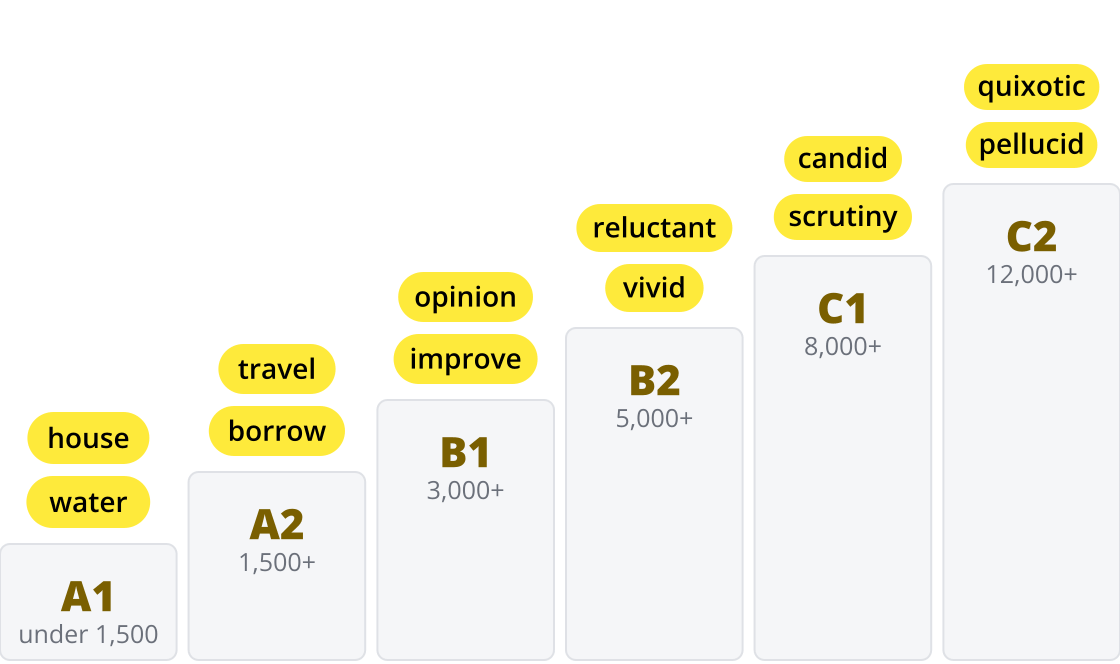
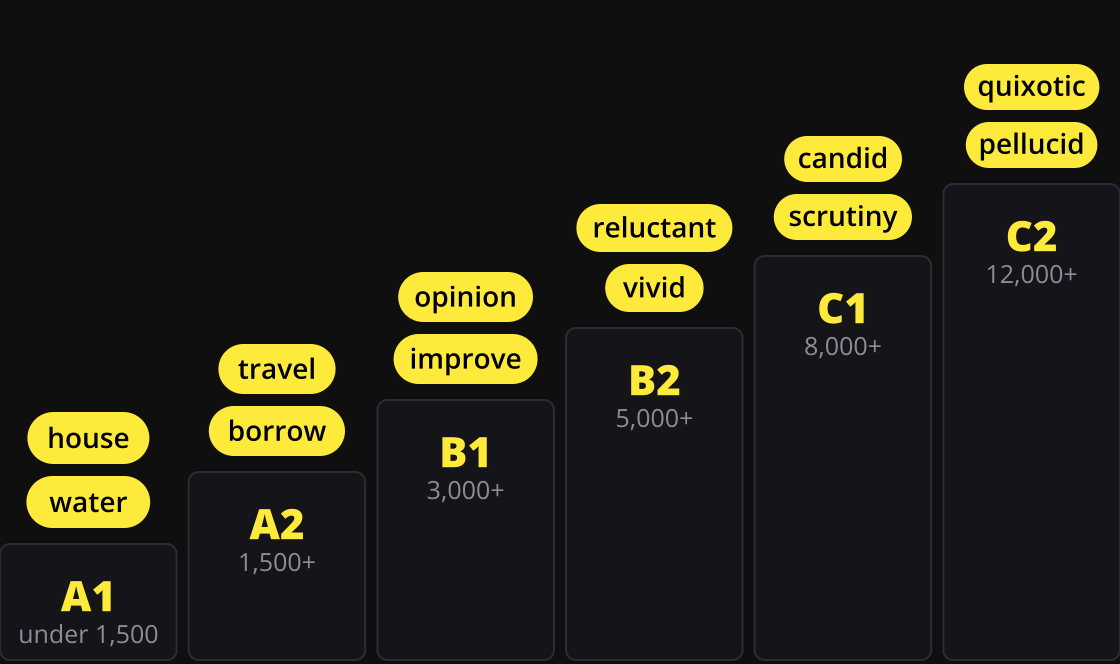
The number you get is an estimate of how many English words you recognise and understand. It counts words the way a dictionary lists them, so walk, walked and walking are not three separate words, but walk and walker are. It measures recognition: whether you know what a word means when you see it, not whether you would use it yourself.
To give the number some meaning, here is how it lines up with the six CEFR levels used by language schools and exams across the world. CEFR describes what you can do in a language rather than how many words you know, so treat this as a rough guide, not a certificate. Why different sources give different numbers is explained in how many words you need for each English level.
| Level | Words | What you can usually read and follow |
|---|---|---|
| A1 | under 1,500 | Everyday basics: greetings, numbers, prices, simple questions and signs. |
| A2 | 1,500 – 3,000 | Routine topics such as family, shopping, travel and work, in short and simple texts. |
| B1 | 3,000 – 5,000 | Most everyday conversation, simple articles on familiar topics, graded readers. |
| B2 | 5,000 – 8,000 | News articles, TV series with subtitles and general non-fiction, with the odd look-up. |
| C1 | 8,000 – 12,000 | Novels, films without subtitles, and academic or professional reading with few gaps. |
| C2 | 12,000 and more | Near-native range, including rare, literary and technical vocabulary. |
How other people score
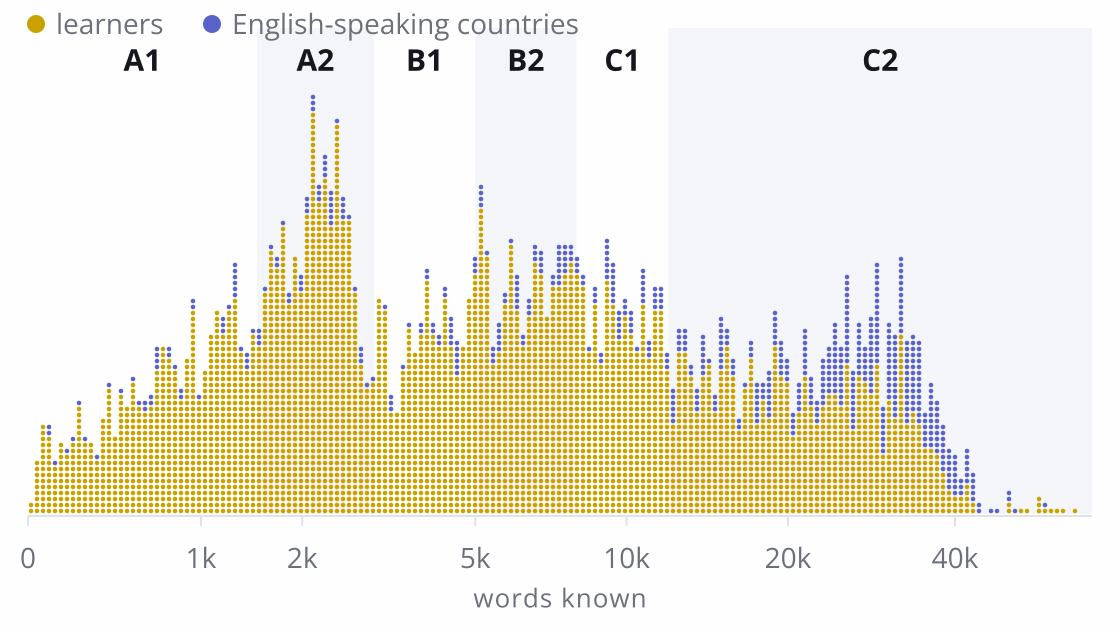
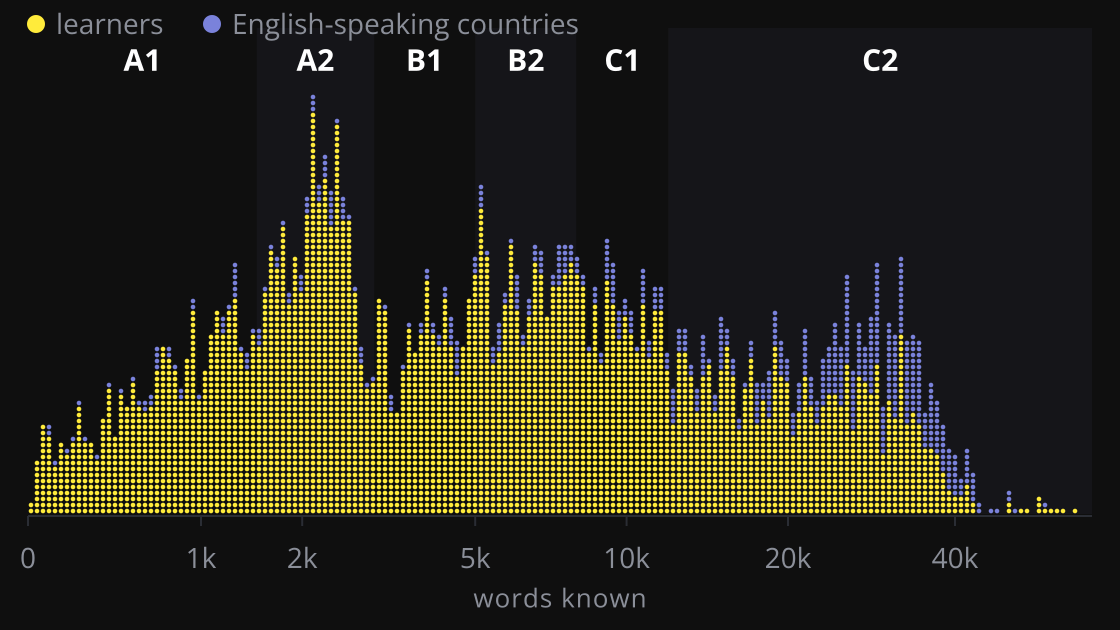
Among everyone who has taken the test, results are spread surprisingly evenly: each of the six levels above holds somewhere between 14% and 20% of test-takers. Half of English learners score below about 5,000 words, a quarter below 1,800, and the top tenth above 15,000.
People in English-speaking countries score higher, with a typical result around 9,000 and a quarter of them above 19,000. Scores above 30,000 are rare even among native speakers, and usually belong to people who read a lot; research on native vocabulary is summed up in how many words a native English speaker knows. If you are learning English and land anywhere near the native range, that is a genuinely remarkable result. You can see how results differ from country to country on the statistics page.
How accurate is it?
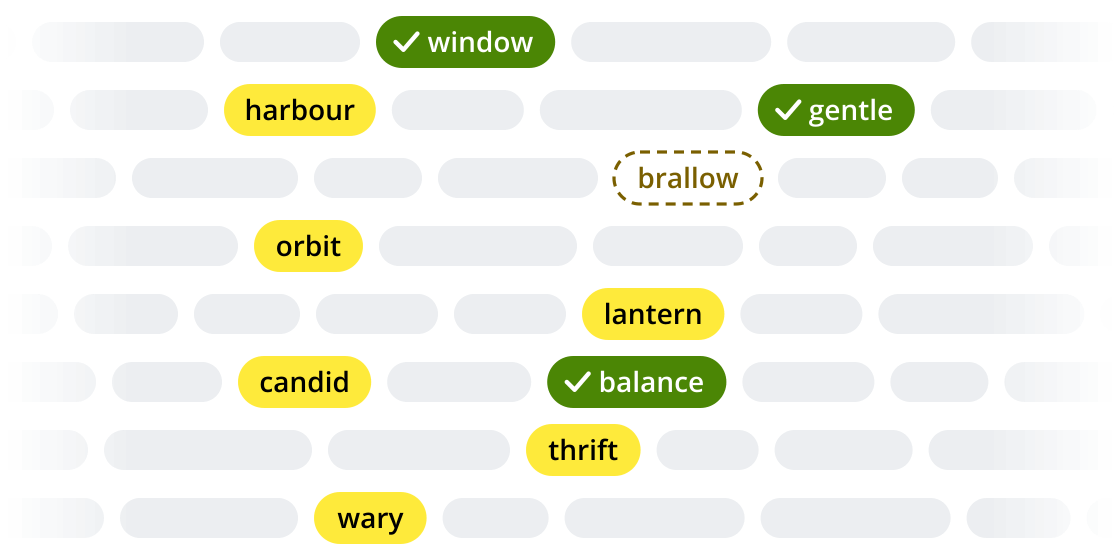
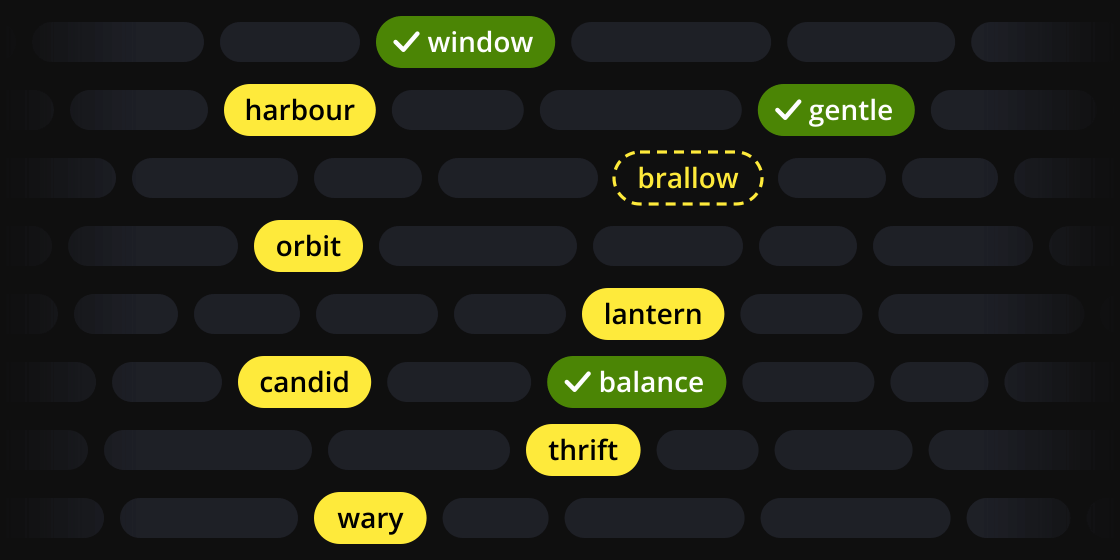
Nobody can be asked about every English word, so the test works like an opinion poll: it shows you a carefully chosen sample of about 150 words, from very common to very rare, and works out how much of the language each answer stands for. Your result is an estimate, and the last few digits are noise. If you take the test twice, expect the two numbers to differ, usually by a few hundred words and sometimes by more. The order of magnitude, and your level, are what hold up.
Some of the words in the test do not exist. They look and sound like English, but no dictionary contains them. They are there because people often tick words that feel familiar without really knowing them. Each made-up word you tick tells the test how freely you are ticking, and your result is adjusted to match, so guessing will not raise your score. Each one costs more than the last, so ticking many of them brings your score down sharply. There is more on this in why our test includes words that don't exist, and the full reasoning, with charts, is on the methodology page.
How to grow your vocabulary
- Read a lot, at the right level. You pick up new words from context most easily when you already know almost every word on the page. If you are looking up several words per paragraph, the text is too hard for learning from; choose something a little easier and read more of it.
- Review on a schedule. A new word needs to be met many times before it sticks. Flashcard apps that bring words back just before you would forget them make that far more efficient than rereading lists.
- Learn words together with their neighbours. Notice which words a new word usually comes with: you make a decision, catch a cold, heavy rain. Phrases are easier to remember and much easier to use than isolated words.
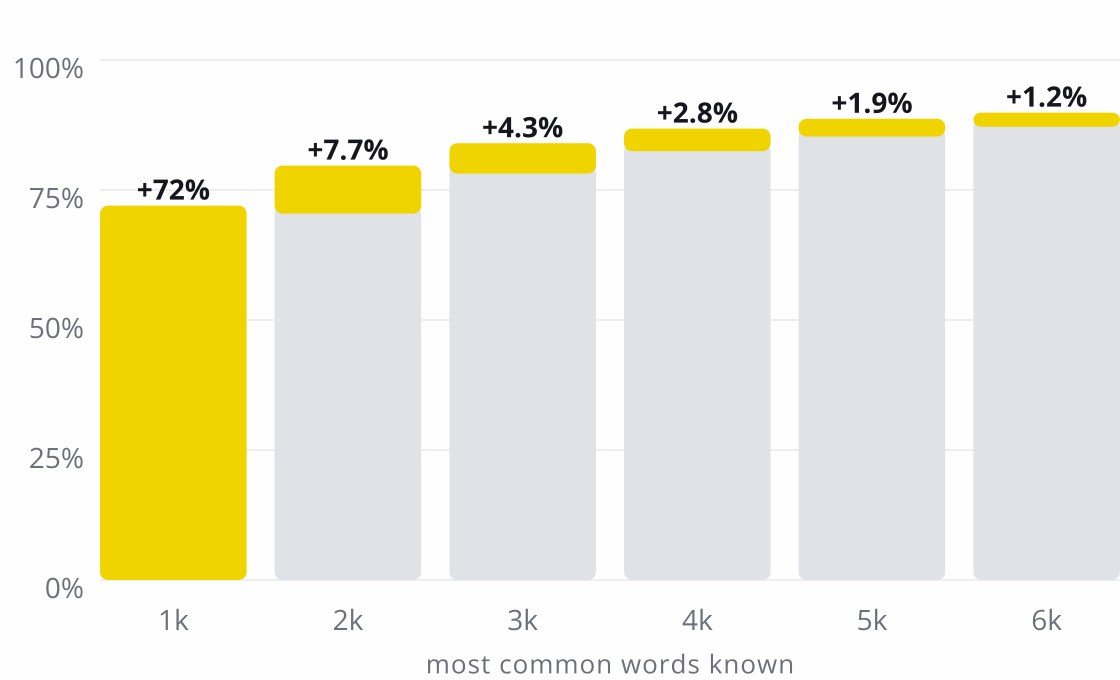
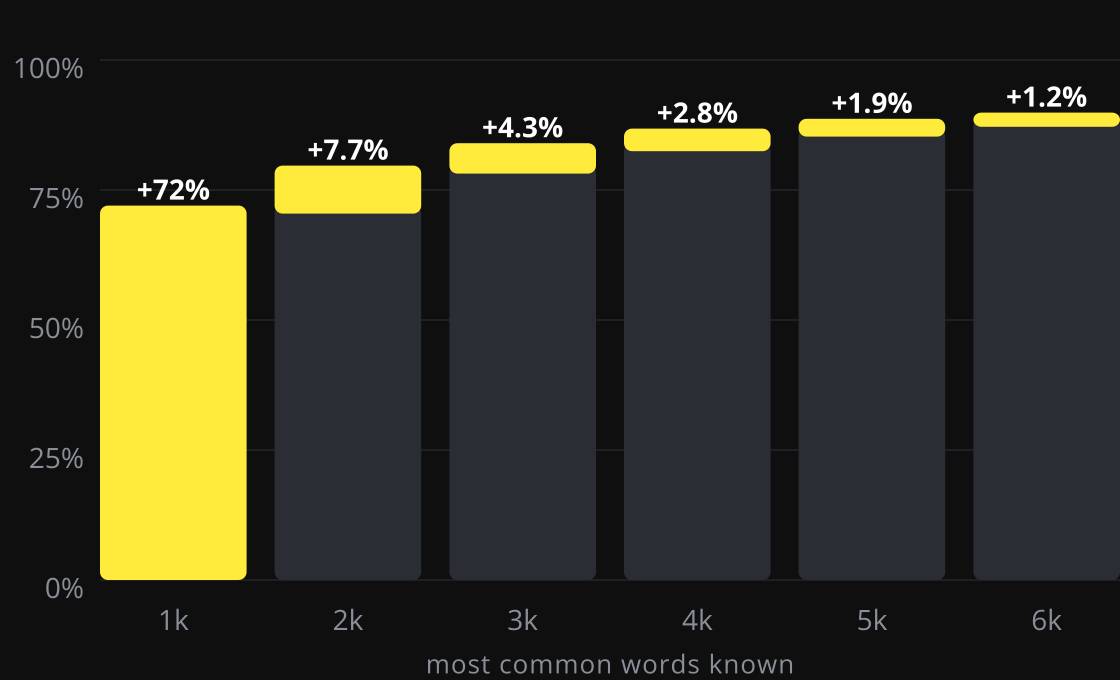
- Go by frequency. The most common few thousand words cover the vast majority of everyday text, so learn those first. Each extra thousand words after that covers less, which is why progress feels slower at higher levels even when you are learning just as much. How fast vocabulary grows puts numbers on it.
- Use the words you learn. Writing and speaking with new words turns them from words you recognise into words you can use, which is a smaller and more demanding vocabulary. More on that in passive and active vocabulary.
- Measure yourself again in a few months. Progress in vocabulary is slow from week to week but clear over a season. Retaking the test every few months shows you it is working.
The research behind these habits is in 7 ways to learn English vocabulary faster.
Frequently asked questions
Is the test free?
Yes. There is no sign-up and no email address needed. You get your result as soon as you finish.
How long does it take?
About five minutes for most people. The test has up to three steps, and the last step, with the rarest words, is the longest.
Is it only for English learners?
No, it is for everyone. Learners use it to see their level, and native speakers to see how wide their vocabulary is. The rare words in the last step are there so that even very large vocabularies can be measured.
Why did I get a different score when I took it again?
Every attempt shows you a different sample of words, so some variation is normal, a bit like two opinion polls giving slightly different numbers. If your results keep rising over months, that is real progress.
Is my result an official certificate?
No. The test gives you a quick, honest estimate of your vocabulary, which is one important part of knowing a language. For a formal qualification you need a recognised exam that also tests grammar, listening, speaking and writing.
Can I share my result?
Yes. Every result gets its own page with an image you can send to friends, so they can see your score and try to beat it.